There was no grand moment. One morning I woke up and thought today I will write a book about my father. There was no clarity, no vision, no neat beginning the way stories are supposed to have. The Day I Decided to Write It All Down was not a carefully planned decision. It was a quiet moment when my emotions became too heavy to carry in silence, and writing felt like the only way forward.
I remember the room. I remember the silence. The kind of silence that is not peaceful but heavy, the kind that presses against your chest and reminds you, without saying a single word, that someone who used to fill it is no longer there. I had been carrying that silence for months. I had been carrying it to work, carrying it through conversations, carrying it into rooms full of people where I smiled and answered questions and gave every impression of being fine. And I was fine. And I was not fine. Both of those things were true at the same time, and I had no idea what to do with that.
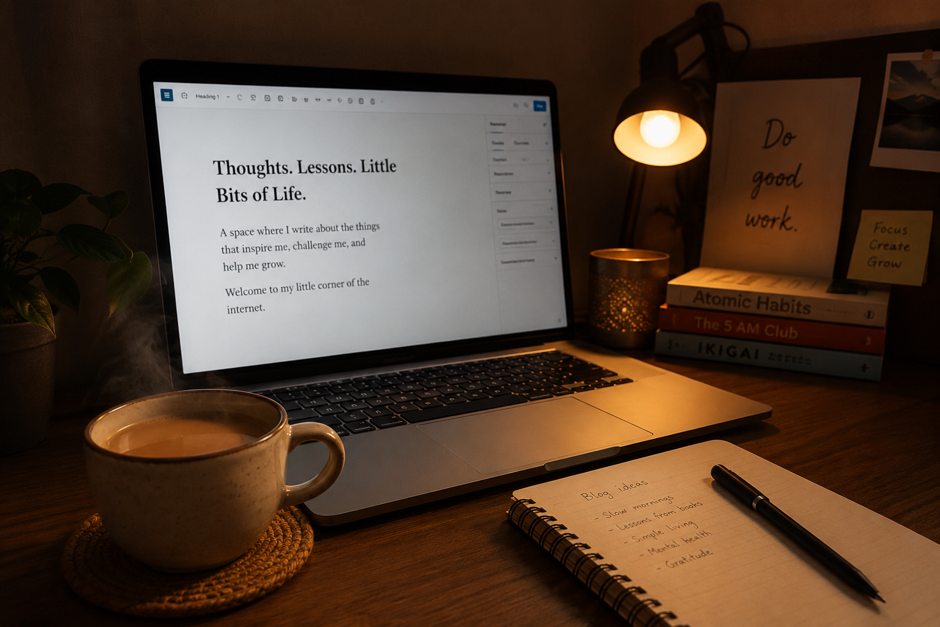
So I opened my laptop.
I did not open it to write a book. I want to be honest about that. I opened it because the words had been sitting inside my chest for so long that they had started to feel like pressure like something that needed to be released before it became something else entirely. I started typing without a plan, without a structure, without any sense of where I was going. I just started with the first true thing I could remember. A morning. A voice. A habit my father had that I had never thought to name while he was alive and could not stop thinking about now that he was gone.
And something happened that I did not expect. He came back.Looking back, The Day I Decided to Write It All Down was also the day I discovered that writing could preserve memories in a way silence never could.
Not in any mystical sense I want to be careful here because grief makes people reach for magic and I understand that impulse but I also want to be honest. He did not come back. But in the writing, something of him returned. The act of putting him into words of describing the way he carried himself, the things he believed, the way he looked at his children like we were already everything he had hoped we would become made him present in a way that the silence never could. The page became a place where he still existed. Where I could still hear him. Where the conversations we never finished could, somehow, continue.
That was the beginning of Even After You.
I am a journalist by training. I have spent years working with words shaping them, arranging them, using them to tell other people’s stories. But this was different. This was not reportage. This was not craft in the way I had practiced it. This was something more desperate and more honest than anything I had written before. This was a daughter trying to find her father in the only place she had left to look.
Writing grief is a strange and sometimes brutal process. You think it will make things worse. You think that pulling the loss out of your chest and placing it on a page will only make the absence more real, more solid, more impossible to ignore. And sometimes it does. There were nights I closed the laptop and sat in the dark for a long time afterward. There were paragraphs that took days to write not because the words were hard to find but because finding them meant admitting things I had been carefully not admitting. I often return to The Day I Decided to Write It All Down, because it reminds me that healing rarely begins with having all the answers. Sometimes it begins with the courage to write the first honest sentence.
But here is what I discovered: the page does not judge you. It does not tell you to be strong. It does not look at you with worried eyes and change the subject. It simply receives whatever you bring to it and holds it there, steady and patient, until you are ready to look at it again.
I am not a therapist. I want to say that clearly and early and often. I have not arrived at any final answers about grief or loss or how to survive the people we love leaving us. I am simply a daughter who missed her father so much that she had to do something with it and writing was the only thing she knew how to do.
The Day I Decided to Write It All Down changed more than my writing it changed the way I understood grief, memory, healing, and the enduring love between a father and daughter.And this blog is where I will keep writing honestly, imperfectly, without a neat conclusion waiting at the end of every post. If you are here because you have lost someone, I hope something in these words finds you. If you are here because you loved the book, thank you more than I know how to say. And if you are here simply because you stumbled in from somewhere else, stay a while. There is always room